
On a chilly New Year’s morning, the house fills with the scent of simmering ham hock, smoky paprika, and earthy beans. For families across the American South — and increasingly, kitchens from coast to coast — that aroma signals something far more meaningful than breakfast. It’s New Year’s black-eyed peas for luck, a tradition promising prosperity, health, and good fortune for the 365 days ahead.
Whether you grew up watching your grandmother stir a pot of Hoppin’ John or you’re encountering the custom for the first time, this guide walks you through the history, folklore, and best recipes for making lucky black-eyed peas part of your New Year’s Day dinner. From the classic stovetop method to quick Instant Pot and vegan adaptations, you’ll find everything you need to start (or continue) a tradition that’s equal parts delicious and meaningful.
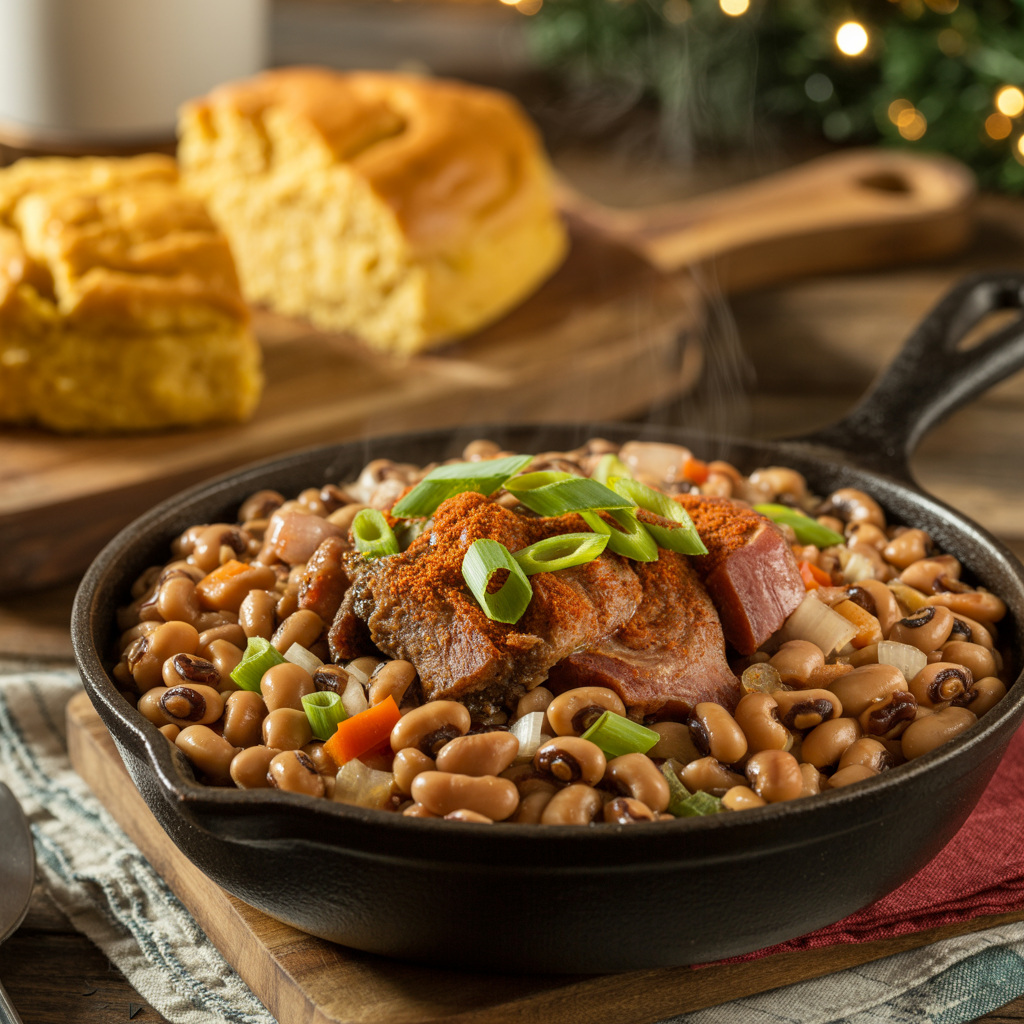
Why Black-Eyed Peas Are Eaten for Luck on New Year’s
The black-eyed peas tradition is one of the most recognizable Southern New Year’s traditions in the United States. The idea is simple: eat black-eyed peas on January 1st and invite good luck into the year. The peas themselves are said to represent coins, while the accompaniments carry their own symbolism — collard greens stand for folding money, cornbread for gold, and pork for forward progress (since pigs root forward, never backward).
Together, these dishes form a prosperity plate that has anchored soul food New Year’s celebrations for generations. It’s a tradition that transcends region and background, inviting anyone who believes in a little culinary magic to pull up a chair.
The History and Cultural Roots of the Tradition
The story of black-eyed peas history stretches back thousands of years and thousands of miles. The pea itself — technically a bean, Vigna unguiculata — originated in West Africa, where it was cultivated as a staple crop and held spiritual significance in many communities. Enslaved Africans brought the seeds across the Atlantic during the transatlantic slave trade, planting them in the American South where they thrived in hot, humid climates.
For enslaved communities and, later, freed Black Southerners, black-eyed peas were a humble but dependable source of nutrition. They were often dismissed by enslavers as “animal feed,” which meant they remained available to those who needed them most. Over time, the pea became intertwined with stories of survival — particularly during the Civil War, when Union troops reportedly left fields of black-eyed peas untouched, considering them fit only for livestock. Those surviving crops helped sustain Southern families through the harsh winter of 1864–1865, cementing the pea’s association with survival and good fortune.
The Gullah Geechee people of the South Carolina and Georgia Lowcountry, descendants of enslaved West Africans, played a foundational role in shaping what we now recognize as Southern cuisine — including the iconic dish Hoppin’ John. The West African cuisine influence is unmistakable: one-pot rice-and-bean dishes echo West African staples like waakye and thiebou niebe.
Interestingly, the idea of eating specific foods for luck on the new year is not uniquely Southern or American. Jewish communities have eaten symbolic foods at Rosh Hashanah for millennia — including black-eyed peas (called rubia or loubia), which symbolize abundance. Similar prosperity food traditions appear across cultures: lentils in Italy, long noodles in China, pickled herring in Scandinavia. What makes the Southern tradition distinct is its deep roots in African diaspora history and the specific symbolism layered into the plate.
By the early 20th century, the black-eyed peas tradition had spread beyond the South, carried by the Great Migration and popularized through cookbooks, food writers, and family gatherings. Today, it’s a beloved part of the American culinary calendar.
Folklore, Symbols, and Regional Variations
Southern folklore around New Year’s food is rich, specific, and sometimes wonderfully quirky. Here are the most common beliefs tied to the lucky black-eyed peas plate:
- Black-eyed peas = coins. Each pea you eat represents a coin, and the more you eat, the wealthier your year will be. Some families insist you eat exactly 365 peas — one for every day — though nobody’s counting.
- Collard greens and black-eyed peas = money and coins together. The greens symbolize paper currency. Some cooks add a clean dime or penny to the pot; whoever finds it in their bowl gets extra luck (or, as grandmothers warn, a chipped tooth).
- Cornbread = gold. Its golden color represents wealth. A square piece means “cornerstone” luck; a round one means the year will come full circle.
- Pork = progress. Ham hock, hog jowl, or fatback is traditionally cooked into the peas because pigs root forward. Eating chicken, by contrast, is sometimes avoided — chickens scratch backward, symbolizing regret or setbacks.
Regional variations abound. In the Lowcountry, Hoppin’ John is traditionally made with Sea Island red peas or field peas rather than the grocery-store black-eyed pea, and the rice is cooked with the peas (not served on the side). In Texas, “Texas caviar” — a cold black-eyed pea salad — shows up at New Year’s parties. In Appalachia, some families eat stewed tomatoes alongside their peas for health.
One popular saying sums up the superstition perfectly: “Peas for pennies, greens for dollars, and cornbread to write checks with.”
Classic Hoppin’ John Recipe (with Meat and Vegetarian Options)
Hoppin’ John is the centerpiece of any soul food New Year’s table. This version delivers deep, smoky flavor with tender peas and perfectly fluffy rice.
Ingredients
- 1 lb dried black-eyed peas, rinsed and sorted
- 1 smoked ham hock (about 8 oz) or 6 oz diced bacon
- 1 large yellow onion, diced
- 1 green bell pepper, diced
- 2 celery stalks, diced
- 3 cloves garlic, minced
- 1 tsp smoked paprika
- ½ tsp cayenne pepper (optional)
- 1 bay leaf
- 6 cups chicken broth (or water)
- Salt and black pepper to taste
- 2 cups long-grain white rice, cooked
- Hot sauce and chopped scallions for serving
Method (Stovetop)
- Soak the peas overnight in cold water, or use a quick-soak method (boil 2 minutes, then let sit 1 hour). Drain.
- Render the pork. In a large Dutch oven over medium heat, cook the ham hock or bacon until browned and fragrant, about 8 minutes.
- Build the flavor base. Add onion, bell pepper, and celery (the “holy trinity”). Cook 5–7 minutes until softened. Stir in garlic, smoked paprika, and cayenne; cook 1 minute.
- Simmer. Add soaked peas, broth, bay leaf, salt, and pepper. Bring to a boil, then reduce heat to low. Cover and simmer 1.5–2 hours until peas are tender but not mushy.
- Finish. Remove the ham hock, shred any meat, and stir it back in. Discard the bay leaf. Adjust seasoning.
- Serve over fluffy white rice with hot sauce and scallions.
Estimated times: Prep 20 min (plus soaking) · Cook 2 hours · Total ~2 hr 20 min
Vegetarian Variant
Replace the ham hock with 2 Tbsp olive oil and 1 tsp liquid smoke. Use vegetable broth and add 8 oz sliced cremini mushrooms for a meaty, umami-rich texture. Stir in 1 Tbsp soy sauce or tamari for depth.
Quick, Vegan, and Instant Pot Versions
Short on time or cooking for a mixed-diet crowd? These adaptations keep the luck without the long simmer.
Quick Canned Black-Eyed Peas (30 Minutes)
- 3 cans (15 oz each) black-eyed peas, drained and rinsed
- 4 slices thick-cut bacon, chopped (omit for vegan)
- 1 onion, diced
- 2 cloves garlic, minced
- 1 tsp smoked paprika, ½ tsp thyme
- 1 cup vegetable or chicken broth
- Salt, pepper, and a splash of apple cider vinegar to finish
Method: Fry bacon until crisp; add onion and garlic. Stir in peas, spices, and broth. Simmer 15 minutes. Finish with vinegar. Serve over microwave rice.
Estimated times: Prep 10 min · Cook 20 min · Total 30 min
Vegan Black-Eyed Peas Recipe (Instant Pot)
- 1 lb dried black-eyed peas (no soak needed)
- 1 Tbsp olive oil
- 1 onion, 1 bell pepper, 2 celery stalks — diced
- 3 cloves garlic
- 1 tsp smoked paprika, 1 tsp cumin, ½ tsp liquid smoke
- 4 cups vegetable broth
- 1 bay leaf, salt and pepper
Method: Sauté vegetables on “Sauté” mode, 5 minutes. Add remaining ingredients. Seal and cook on High Pressure for 25 minutes, natural release 15 minutes. Stir in fresh parsley and a squeeze of lemon.
Estimated times: Prep 10 min · Cook 45 min · Total ~55 min
Slow-Cooker Black-Eyed Peas
Combine all classic-recipe ingredients (except rice) in a slow cooker. Cook Low 7–8 hours or High 4 hours. The low-and-slow method produces exceptionally creamy peas — ideal for make-ahead New Year’s Day dinners.
How to Serve Black-Eyed Peas on New Year’s Day
Hosting a New Year’s Day gathering? These three tips will help you serve a memorable, stress-free meal:
- Make-Ahead Magic. Black-eyed peas actually taste better the next day. Cook them on December 31st and gently reheat on January 1st. The flavors deepen overnight — one of the best meal prep tips for holiday hosts.
- Build a Luck Plate. Serve each guest a symbolic plate: a scoop of Hoppin’ John or peas, a tangle of collard greens, a square of cornbread, and a pork chop or glazed ham slice. Add a small dish of stewed tomatoes for health and a pickle for longevity (a Texas tradition).
- Symbolic Touches. Hide a clean, food-safe coin (wrapped in foil) in the serving pot — the finder gets extra luck. Set the table with gold napkins or candles to echo the “cornbread for gold” theme. Pair with sweet tea, bourbon, or a sparkling Prosecco to toast the new year.
Honoring the Tradition Respectfully
As the black-eyed peas tradition has gone mainstream, it’s important to acknowledge its roots. This is not simply a “quirky Southern custom” — it’s a practice born from the resilience, ingenuity, and cultural memory of enslaved Africans and their descendants. The Gullah Geechee communities of the Lowcountry, in particular, preserved and shaped the culinary traditions that define this meal.
When sharing the tradition — on social media, at a dinner party, or with your children — credit its origins. Support Black-owned restaurants, buy from Black farmers, and explore cookbooks by authors like Jessica B. Harris, Michael Twitty, and Edna Lewis, who document the deep history behind the food. Celebrating with awareness makes the tradition richer, not smaller.
Try This at Home
Whether you’re simmering a pot from scratch or cracking open a can of lucky black-eyed peas at the last minute, the real magic is in the intention. Gather your people, ladle out the peas, and toast to the year ahead.
👉 Share your family’s variation in the comments — or download our printable Hoppin’ John recipe card .
