
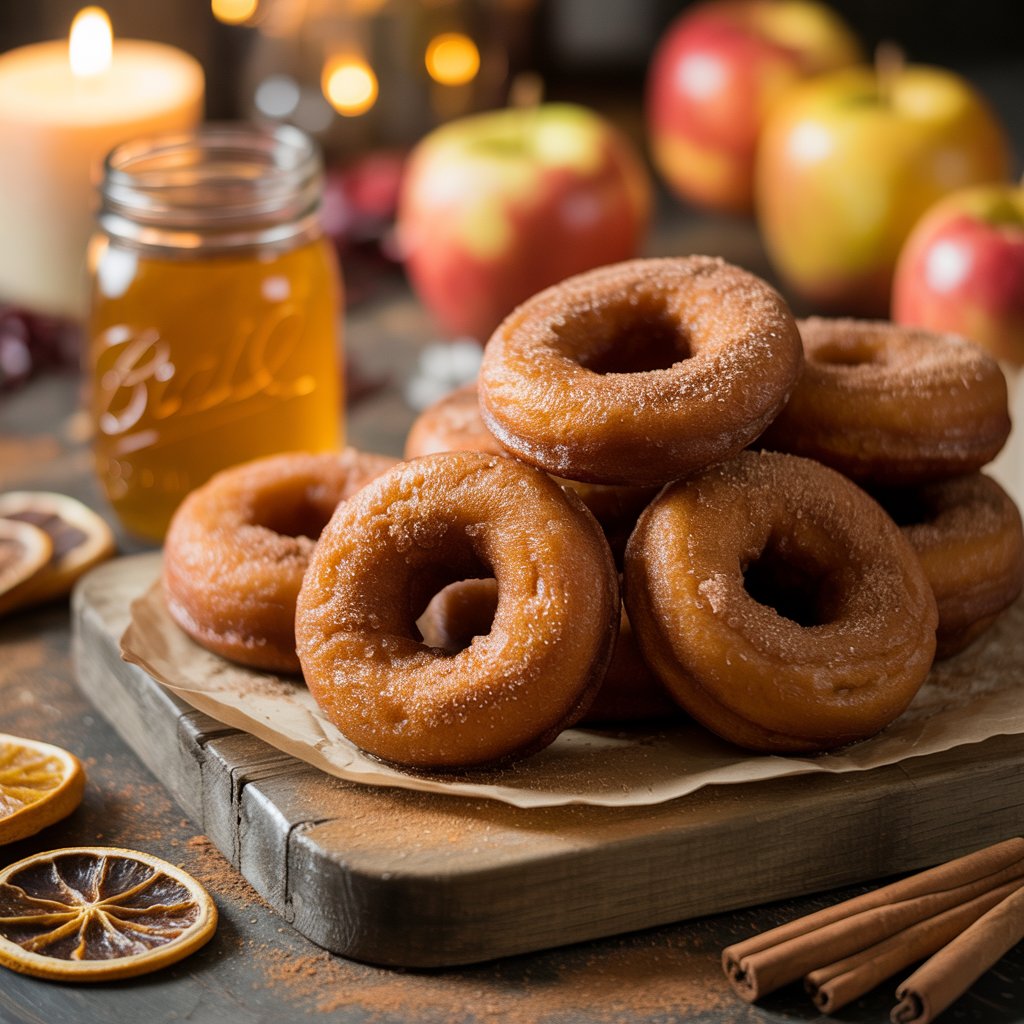
There’s something magical about a crisp autumn morning—the kind where steam rises from a mug of hot cider and the air carries the warm, spiced scent of cinnamon and freshly fried dough. If you’ve ever visited a New England orchard or countryside cider mill in October, you know exactly what I’m talking about: those impossibly tender, cake-style donuts rolled in cinnamon sugar while still warm, with that unmistakable apple flavor that makes you close your eyes and savor every bite.
The good news? You don’t need to drive hours or wait for a weekend farmers market to enjoy them. This apple cider donut recipe brings that orchard-fresh experience right into your kitchen, and I’ll walk you through every step to make sure your homemade cider donuts turn out light, flavorful, and perfectly golden. Fresh frying is the secret to that irresistible texture—crispy on the outside, tender on the inside—and trust me, once you taste these fried apple cider donuts straight from the pot, store-bought versions won’t compare.
Why Apple Cider Donuts Are a Fall Classic
Apple cider donuts aren’t just another seasonal treat—they’re deeply woven into American autumn traditions, particularly in the Northeast. Their story begins in the cider mills of New England, where fresh-pressed cider has been a staple since colonial times. As apple harvest season peaked each fall, orchards and mills started offering hot, fresh-fried donuts as a way to draw visitors and celebrate the season. The pairing made perfect sense: the natural sweetness and tartness of fresh apple cider complemented warm spices like cinnamon and nutmeg, creating a flavor profile that felt both comforting and festive.
What makes these New England cider donuts so special is the use of reduced apple cider in the dough. By simmering fresh cider until it concentrates into a syrup-like reduction, you amplify the apple flavor without adding excess liquid that could throw off your dough’s consistency. The result is a donut with genuine apple essence that pairs beautifully with the warming spices of fall.
Cider mill donuts became synonymous with autumn road trips, pumpkin festivals, and family orchard visits. There’s a reason people line up for them: the combination of fresh-fried dough, cinnamon sugar coating, and that subtle apple tang creates a taste memory that lingers long after the last bite. When you make cider donuts from scratch at home, you’re not just baking—you’re participating in a tradition that celebrates the best flavors of the season.
Ingredients and Equipment
Ingredients (yields 12–16 donuts)
For the cider reduction:
- 2 cups fresh apple cider (not apple juice)
For the donut dough:
- 3½ cups all-purpose flour
- 1½ teaspoons baking powder
- 1 teaspoon baking soda
- 1 teaspoon ground cinnamon
- ½ teaspoon ground nutmeg
- ¼ teaspoon ground allspice (or mace)
- ½ teaspoon salt
- ½ cup (1 stick) unsalted butter, softened
- 1 cup packed light brown sugar
- 2 large eggs, room temperature
- ½ cup buttermilk (or ½ cup milk + 1½ teaspoons lemon juice)
- 1 teaspoon vanilla extract
- ½ cup cider reduction (cooled)
For frying:
- 6–8 cups neutral oil with high smoke point (canola, vegetable, or peanut oil)
For cinnamon-sugar coating:
- 1 cup granulated sugar
- 2 teaspoons ground cinnamon
For optional glaze:
- 1½ cups powdered sugar
- 2–3 tablespoons milk or fresh apple cider
- ½ teaspoon vanilla extract
- Pinch of salt
Equipment You’ll Need
- Heavy-bottomed pot or deep fryer (at least 5-quart capacity)
- Candy or instant-read thermometer (essential for donut frying tips success)
- Slotted spoon or spider skimmer
- Wire cooling rack set over a baking sheet
- Rolling pin
- Donut cutter (or 3-inch round cutter + 1-inch hole cutter)
- Medium saucepan (for cider reduction)
- Stand mixer or large bowl and hand mixer
- Parchment paper
Quick fact: The best oil for frying donuts has a smoke point above 400°F. Peanut oil adds subtle nuttiness, while canola and vegetable oils are neutral and budget-friendly.
Step-by-Step Recipe: How to Make Fresh Apple Cider Donuts
Prep time: 20 minutes | Chill time: 1 hour | Cook time: 15 minutes | Total time: 1 hour 35 minutes
Difficulty: Intermediate | Yield: 12–16 donuts
Step 1: Make the Cider Reduction (15 minutes)
Pour 2 cups of fresh apple cider into a medium saucepan and bring to a simmer over medium-high heat. Reduce heat to maintain a gentle simmer and cook until the cider reduces to about ½ cup, approximately 12–15 minutes. You’ll know it’s ready when it thickens slightly and becomes syrupy. Remove from heat and let cool completely.
Tip: Make the reduction ahead of time and refrigerate it. Cold cider reduction is easier to incorporate into the dough.
Step 2: Mix the Dry Ingredients (5 minutes)
In a large bowl, whisk together the flour, baking powder, baking soda, cinnamon, nutmeg, allspice, and salt. Set aside.
Why this matters: Properly distributing the leavening agents ensures your cider donuts recipe yields light, tender donuts rather than dense ones.
Step 3: Cream the Butter and Sugar (5 minutes)
In a stand mixer fitted with the paddle attachment (or using a hand mixer), cream the softened butter and brown sugar on medium speed until light and fluffy, about 2–3 minutes. Add the eggs one at a time, mixing well after each addition. Scrape down the sides of the bowl.
Step 4: Combine Wet and Dry Ingredients (5 minutes)
With the mixer on low speed, alternate adding the dry ingredients and the wet ingredients (buttermilk, vanilla, and ½ cup of the cooled cider reduction). Begin and end with the dry ingredients, mixing just until combined after each addition. Do not overmix—the dough should come together but may still look slightly rough.
Overmixing develops gluten, which leads to tough donuts. Mix until just combined.
Step 5: Chill the Dough (1 hour)
Turn the dough out onto a lightly floured surface and gently pat it into a disk. Wrap in plastic wrap and refrigerate for at least 1 hour (or up to overnight). Chilling firms up the butter and makes the dough easier to roll and cut.
Step 6: Roll and Cut the Donuts (10 minutes)
On a lightly floured surface, roll the chilled dough to ½-inch thickness. Use a donut cutter to cut out donuts and holes. Gather scraps, re-roll, and cut again to maximize yield. Place cut donuts on a parchment-lined baking sheet.
If you don’t have a donut cutter, use a 3-inch round cutter for the donut and a 1-inch cutter (or the wide end of a piping tip) for the hole.
Step 7: Heat the Oil (10 minutes)
Pour 6–8 cups of oil into your heavy-bottomed pot, ensuring it’s no more than halfway full (to prevent overflow when adding donuts). Attach your thermometer and heat the oil over medium heat to 350°F–375°F. This temperature range is critical for how to fry donuts properly—too cool and they’ll absorb oil; too hot and they’ll brown before cooking through.
Step 8: Fry the Donuts (15 minutes)
Working in small batches of 2–3 donuts at a time, carefully lower the donuts into the hot oil using your spider skimmer. Fry for 1–2 minutes per side, flipping once when the underside turns golden brown. The donuts should reach an internal temperature of about 190°F.
Use the skimmer to transfer fried donuts to the wire rack set over a baking sheet (this catches excess oil). Let them drain for 30 seconds.
Safety first: Never leave hot oil unattended, and keep a lid nearby to smother potential flames. Never add water to an oil fire.
Step 9: Coat in Cinnamon Sugar or Glaze (5 minutes)
For cinnamon-sugar donuts: While the donuts are still warm (but cool enough to handle), toss them in a bowl with the cinnamon-sugar mixture until fully coated.
For glazed donuts: Whisk together the powdered sugar, milk (or cider), vanilla, and salt until smooth. Dip warm donuts into the glaze, letting excess drip off, and place on the wire rack to set.
Step 10: Serve and Enjoy!
These autumn desserts are best served warm on the same day they’re made. Pair them with hot coffee, a mug of fresh apple cider, or chai tea for the ultimate fall baking recipe experience.
Variations and Substitutions
Baked Apple Cider Donuts
Not in the mood for frying? You can make baked apple cider donuts with a few adjustments. Preheat your oven to 375°F and grease a donut pan. Pipe or spoon the dough into the pan, filling each cavity about ¾ full. Bake for 10–12 minutes until golden and a toothpick comes out clean. While still warm, brush lightly with melted butter and toss in cinnamon sugar. The texture will be more cake-like and less crispy than fried, but still delicious.
Gluten-Free Cider Donuts
Swap the all-purpose flour for a cup-for-cup gluten-free flour blend that includes xanthan gum (or add ½ teaspoon xanthan gum if your blend doesn’t contain it). Gluten-free cider donuts benefit from a longer chill time—at least 2 hours—to help the dough hold together better during frying. Handle the dough gently, as gluten-free dough can be more fragile.
Vegan Cider Donuts
Make these vegan cider donuts by substituting plant-based milk mixed with 1½ teaspoons apple cider vinegar for the buttermilk (let it sit for 5 minutes to curdle). Use vegan butter or coconut oil in place of dairy butter, and replace the eggs with flax eggs (1 tablespoon ground flaxseed + 3 tablespoons water per egg, mixed and allowed to gel for 5 minutes) or aquafaba (3 tablespoons per egg).
Flavor Twists
- Maple glaze: Replace the milk in the glaze with pure maple syrup and add ¼ teaspoon maple extract.
- Pumpkin spice donut: Increase the cinnamon to 1½ teaspoons and add ½ teaspoon ground ginger and ¼ teaspoon ground cloves to the dough.
- Brown-butter glaze: Brown 4 tablespoons of butter until nutty and golden, let cool slightly, then whisk into your glaze mixture.
- Chai-spiced: Add 1 teaspoon chai spice blend to the dough and use chai tea concentrate in place of some of the cider reduction.
Troubleshooting and Fry Safety Tips
Even experienced bakers run into issues when making apple cider doughnuts. Here’s how to solve common problems:
Common Problems and Fixes
- Dense or tough donuts: You likely overmixed the dough or used expired leavening agents. Mix until just combined, and check that your baking powder and baking soda are fresh (they should fizz when added to water).
- Greasy or oily donuts: Your oil temperature was too low, causing the donuts to absorb excess oil. Use a thermometer and maintain 350°F–375°F throughout frying. Let the oil return to temperature between batches.
- Donuts falling apart in the oil: The dough was too wet or the oil was too hot, causing the exterior to set before the interior cooked, leading to cracking. Ensure your dough is properly chilled and firm, and don’t let oil exceed 375°F.
- Donuts browning too quickly but raw inside: Oil is too hot. Reduce heat and extend frying time slightly. Test doneness with an instant-read thermometer (should reach 190°F).
Frying Safety Essentials
- Never leave hot oil unattended. Oil can overheat and ignite in minutes.
- Use a thermometer to monitor oil temperature continuously.
- Fry in small batches to avoid overcrowding, which drops oil temperature and can cause splashing.
- Keep a lid nearby to smother flames if they occur. Slide the lid over the pot and turn off the heat.
- Never pour water on an oil fire. It will cause the oil to splatter and spread the fire. Use a lid or Class B fire extinguisher instead.
- Let oil cool completely before disposing. Never pour hot oil down the drain.
Serving, Storage, and Pairing Ideas
How to Serve
Apple cider donuts are at their absolute best when served warm, within a few hours of frying. The cinnamon-sugar coating stays crisp, and the interior remains tender and moist. Arrange them on a rustic wooden board or vintage cake stand for a charming apple orchard treats display.
Perfect Pairings
- Hot fresh apple cider or spiced cider
- Coffee (especially dark roast or flavored varieties like vanilla or hazelnut)
- Chai tea or pumpkin spice latte
- Salted caramel dipping sauce
- Whipped cream or crème fraîche
Storage and Reheating
These donuts are best eaten the same day, but you can store leftovers:
- Cinnamon-sugar donuts: Keep in an airtight container at room temperature for up to 1 day.
- Glazed donuts: Refrigerate in an airtight container for 2–3 days (the glaze may soften).
- Reheating: Warm donuts in a 350°F oven for 3–5 minutes or in an air fryer at 325°F for 2–3 minutes to restore crispness.
- Freezing: Freeze unglazed donuts in a single layer, then transfer to a freezer bag. Thaw at room temperature and reheat before serving.
Bringing the Orchard Home
Making homemade cider donuts from scratch is more than just a baking project—it’s a way to slow down, savor the season, and create something genuinely special. Whether you’re hosting a fall brunch, looking for a weekend activity with the family, or simply craving that nostalgic cider mill flavor, this apple cider donut recipe delivers.
The beauty of fried apple cider donuts lies in their simplicity: real ingredients, warm spices, and the transformative magic of fresh-fried dough. Once you master the technique, you’ll find yourself making them every autumn, maybe even starting your own tradition. And if you’re ever in New England during cider season, be sure to visit a local mill to taste the original—then come home and appreciate how perfectly your homemade version captures that spirit.
Your turn! Have you tried this recipe? Save it, print it, and tag your photos with #HomemadeCiderDonuts on Instagram—I’d love to see your creations. Leave a comment below with your favorite variations or ask any questions. And if you’re searching for cider donuts near me this fall, support your local orchards and cider mills. Happy frying!
