
There’s a particular kind of magic that happens in a kitchen on a winter evening. The windows fog. The house fills with a low, steady simmer sound — that soft blip-blip of a Dutch oven doing its quiet work. And then the aroma hits: beef caramelized in butter until deeply browned, onions turned sweet and jammy, garlic releasing its perfume, a splash of red wine lifting the whole thing into something that smells like home.
My grandmother made beef stew every Sunday from November through March, without exception. She’d brown the meat first thing in the morning, then tuck the pot into the oven and go about her day, letting the low heat do what no amount of rushing ever could. By supper, the chuck roast had surrendered into something fork-tender, the potatoes had absorbed every last drop of gravy, and the kitchen felt like the warmest room in the world. That’s the version I’ve spent years chasing — and I think I’ve finally pinned it down.
This is the slow-simmer beef stew I make on repeat: reliable enough for a weeknight, special enough for company, and genuinely better the next day. Whether you’re cooking for two or feeding a crowd of eight, this hearty dinner recipe will become part of your rotation. Grab an apron — let’s simmer.
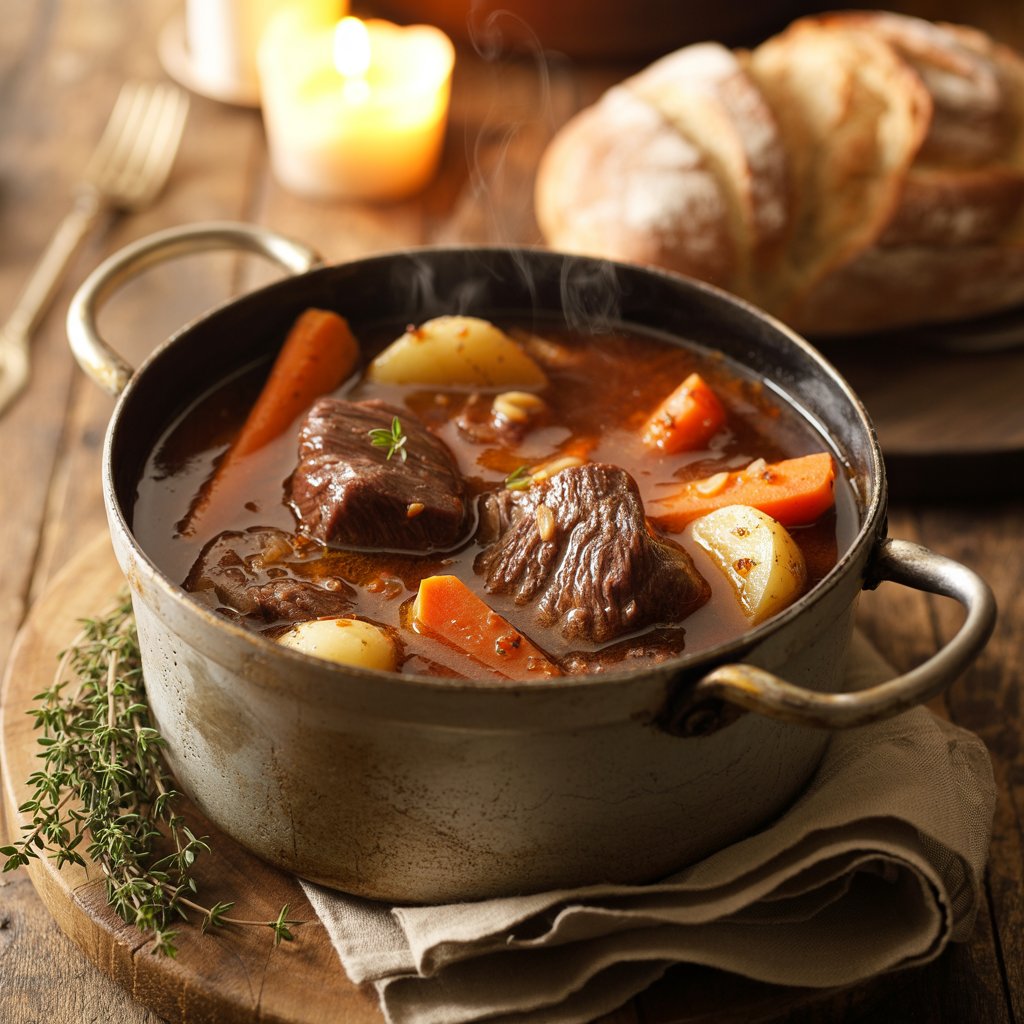
Why This Beef Stew Works Every Time
A great beef stew isn’t complicated, but it is deliberate. The difference between a so-so pot and a truly memorable one comes down to four small principles, and once you understand them, you’ll never have a failed stew again.
Low and slow breaks down collagen. Chuck roast is loaded with connective tissue — exactly what you want for stew. When simmered gently at 275–300°F for two to three hours, that tough collagen converts to silky gelatin, which is what gives the broth its body and the beef that melt-in-your-mouth texture. A hard, rolling boil will seize the meat and leave it stringy. Keep it at a bare whisper of a simmer.
Browning builds flavor. This is the Maillard reaction at work — the same chemistry that makes a good steak crust so irresistible. Skipping this step means skipping half the stew’s flavor. Pat the beef dry, don’t crowd the pot, and let each batch develop a deep golden crust. That fond (the browned bits stuck to the bottom) is pure gold.
Acid is the secret finish. Beef and butter are rich — beautifully rich — but richness without contrast gets heavy. A spoonful of tomato paste added early, a splash of red wine or vinegar stirred in at the end, brightens the whole bowl and makes every bite taste balanced.
The right liquid ratio makes gravy, not soup. You want the broth to just barely cover the meat. Too much stock and you dilute the flavor; too little and the top pieces dry out. The goal is a sauce that clings to the spoon.
Ingredients You’ll Need (and Sensible Substitutions)
This recipe serves 6–8 and uses pantry-friendly ingredients. Here’s what you’ll want on hand:
| Ingredient | Quantity | Notes |
|---|---|---|
| Beef chuck roast | 3 lbs | Boneless, cut into 1½” cubes. Bone-in adds even more flavor. |
| Yellow onion | 2 medium | Diced |
| Carrots | 4 large | Cut into 1″ chunks |
| Celery | 3 stalks | Diced |
| Garlic | 5 cloves | Minced |
| Yukon Gold potatoes | 1½ lbs | 1½” cubes; red potatoes work too |
| Tomato paste | 2 tbsp | Adds umami and color |
| Beef stock | 4–5 cups | Low-sodium so you control the salt |
| Dry red wine | 1 cup | Cabernet or Merlot; optional |
| Worcestershire sauce | 1 tbsp | Instant depth |
| All-purpose flour | ¼ cup | For coating the beef |
| Fresh thyme | 4 sprigs | Or 1 tsp dried |
| Bay leaves | 2 | Remove before serving |
| Butter + olive oil | 2 tbsp each | For browning |
| Kosher salt & black pepper | To taste |
Pantry swaps: No stock? Use 4 cups water + 2 beef bouillon cubes. No wine? Substitute an equal amount of stock plus 1 tbsp balsamic vinegar. Need gluten-free? Skip the flour and thicken at the end with a cornstarch slurry (2 tbsp cornstarch + 2 tbsp cold water).
Pro tip: Cut every vegetable roughly the same size as your beef cubes. It looks better, cooks more evenly, and makes every spoonful balanced.
Step‑by‑Step: How to Make Slow‑Simmered Beef Stew
Tuck in — this is the heart of the recipe. Total hands-on time is about 25 minutes; total cook time is roughly 3 hours in the oven (or 6–8 hours in a slow cooker).
1. Prep the Beef and Vegetables
Pat the beef cubes very dry with paper towels — moisture is the enemy of browning. Season generously with kosher salt and pepper, then toss with the flour until lightly coated. Chop your onions, celery, and garlic; set the carrots and potatoes aside to add later so they don’t turn to mush.
2. Brown the Beef (Don’t Skip This!)
Preheat your oven to 300°F. Heat a heavy Dutch oven over medium-high heat with 1 tablespoon each of butter and olive oil. Working in batches so the meat isn’t crowded, sear the beef on all sides until deeply browned — about 6–8 minutes per batch. Transfer the browned meat to a plate. If the pot steams instead of sears, you’ve crowded it. Patience here pays off.
3. Build the Flavor Base
Reduce heat to medium. Add the onions and celery to the pot with a pinch of salt. Cook, scraping up the browned fond with a wooden spoon, for about 6–8 minutes until soft and golden. Add the garlic and tomato paste and cook for 2 more minutes, stirring, until the paste darkens from bright red to brick — this cooks out the raw edge and deepens the umami.
4. Deglaze and Braise
Pour in the red wine (or stock) and scrape the bottom of the pot to release every bit of fond. Let it reduce for 1 minute. Return the beef and any accumulated juices to the pot. Add enough beef stock to just barely cover the meat. Drop in the thyme sprigs and bay leaves. Bring to the gentlest simmer on the stovetop — you want one bubble breaking the surface every second or two.
5. Go Low and Slow
Cover the Dutch oven tightly and transfer to the 300°F oven. Cook for 2 hours, undisturbed. After 2 hours, pull the pot out and stir in the potatoes and carrots. Cover and return to the oven for another 45 minutes to 1 hour, until a fork slides through the beef with zero resistance and the vegetables are tender but not falling apart.
6. Test for Doneness
The fork test is your best friend here. Pull one piece of beef onto a cutting board and press with a fork — it should yield easily, almost falling into strands. The potatoes should pierce cleanly with a paring knife. If the meat still resists, give it 15 more minutes and check again.
7. Thicken and Finish
If the broth looks thinner than you’d like, stir in a beurre manié (1 tbsp softened butter mashed with 1 tbsp flour) a few bits at a time, simmering 2–3 minutes between additions. Or whisk 2 tbsp cornstarch with 2 tbsp cold water and stir it in. Remember: the stew will thicken further as it cools, so stop a touch short of your ideal consistency.
Remove the bay leaves and thyme stems. Taste and adjust the salt. Finish with a splash of red wine vinegar or a squeeze of lemon, and scatter fresh parsley over the top. This final acid and herb hit is what takes the stew from “good” to “I need the recipe.”
How to thicken beef stew safely: Always add thickeners at a simmer, never off the heat, and give them a few minutes to activate before judging. Re-season after thickening — starches can mute salt.
Easy Variations and Dietary Swaps
One of the best things about this comfort food recipe is how forgiving it is. Make it yours.
🍲 Slow Cooker or Instant Pot versions
- Slow cooker: Brown the beef and soften the aromatics on the stovetop first (don’t skip — slow cookers can’t do this), then transfer everything except the potatoes and carrots to the slow cooker. Cook on LOW 7–8 hours. Add the vegetables in the final 90 minutes so they stay intact.
- Instant Pot: Use the Sauté function to brown. Pressure cook beef + liquid + aromatics on HIGH for 35 minutes, natural release 10 minutes. Add vegetables and pressure cook another 4 minutes. Quick release.
🌿 Gluten-free, Low-carb, and Keto swaps
- Gluten-free: Skip the flour dredge. Thicken at the end with a cornstarch or arrowroot slurry.
- Lower-carb: Swap the potatoes for turnips or rutabaga — both hold their shape beautifully and absorb flavor.
- Keto-friendly: Omit the potatoes and carrots entirely. Add sliced cremini mushrooms and cubed rutabaga, and thicken with ¼ tsp xanthan gum whisked into a bit of oil before stirring in.
🍄 Vegetarian / Vegan alternative
Replace the beef with thick slices of king oyster or portobello mushrooms and cubes of seitan. Use vegetable stock and add 1 tbsp white miso or soy sauce for that deep, savory bottom note. Brown the mushrooms in batches exactly as you would the beef. Simmer time drops to about 45 minutes.
🔥 Flavor twists
- Smoky & spicy: Add 1 tsp smoked paprika and ½ tsp chipotle powder with the tomato paste.
- Irish pub-style: Swap the red wine for Guinness or any stout — the malty notes are incredible with beef.
- Herbes de Provence: Replace the thyme with 1 tsp herbes de Provence for a Provençal feel; finish with chopped tarragon.
Serving Suggestions, Storage & Reheating Tips
What to Serve With Beef Stew
The stew is the star, so keep sides simple and soakable:
- Crusty baguette or sourdough, torn into pieces
- Buttered egg noodles or pappardelle
- Creamy mashed potatoes (yes, potatoes on potatoes — trust the process)
- Soft polenta or a scoop of buttered rice
- A sharp, acidic green salad to cut the richness
Beverage Pairings
A robust Cabernet Sauvignon, Malbec, or Côtes du Rhône plays perfectly with the beef. For beer, a dark stout or porter. Nonalcoholic: black tea, sparkling water with lemon, or tart cherry juice.
Make-Ahead & Freezer-Friendly
This is one of those make-ahead dinners that actually improves overnight — the flavors marry and the gravy thickens to a silkier texture. Let the stew cool completely (within 2 hours for food safety), then divide into shallow containers.
- Fridge: Up to 4 days
- Freezer: Up to 3 months in airtight containers — leave an inch of headspace for expansion
Reheating
Thaw frozen stew overnight in the fridge. Reheat gently on the stovetop over low heat, stirring occasionally, adding a splash of stock or water if it’s thicker than you’d like. Alternatively, reheat in a covered dish at 325°F for 25–30 minutes.
Leftover Reinventions
- Top the stew with mashed potatoes and bake for a quick shepherd’s pie
- Fold into puff pastry for a rustic beef pot pie
- Spoon over soft polenta or toss with wide pasta ribbons
Final Thoughts: Slow‑Simmered Love in Every Bowl
There’s a reason beef stew has survived centuries and crossed every cuisine — it’s an act of care made edible. You’re saying, without words, I had time for you today. I let something simmer so you could come home to warmth. That’s the real recipe, and it doesn’t need a timer.
Now I want to hear from you. Make this hearty beef stew this weekend and tell me what you changed. Did you go Guinness? Add parsnips? Throw in a Parmesan rind (you should)? Leave a comment, tag your photo with #SlowSimmeredLove, and save it for the next cold night you need a big bowl of something that tastes like someone was thinking of you.
Happy simmering. 💛
📋 Printable Recipe Card: Slow‑Simmered Beef Stew
Yield: 6–8 servings | Prep: 25 min | Cook: ~3 hrs (oven) | Total: ~3 hrs 25 min
Ingredients
- 3 lbs beef chuck roast, cut into 1½” cubes
- ¼ cup all-purpose flour (or cornstarch for GF)
- Kosher salt & freshly ground black pepper
- 2 tbsp butter + 2 tbsp olive oil
- 2 medium yellow onions, diced
- 3 celery stalks, diced
- 5 garlic cloves, minced
- 2 tbsp tomato paste
- 1 cup dry red wine (or extra stock + 1 tbsp balsamic)
- 4–5 cups low-sodium beef stock
- 1½ lbs Yukon Gold potatoes, cubed
- 4 large carrots, cut into 1″ chunks
- 4 fresh thyme sprigs
- 2 bay leaves
- 1 tbsp Worcestershire sauce
- Splash of red wine vinegar or lemon juice, to finish
- Fresh parsley, to garnish
Instructions
- Prep & coat beef: Pat beef dry, season generously, toss with flour.
- Brown: Heat butter + oil in a Dutch oven over medium-high. Sear beef in batches until deep golden, 6–8 min per batch. Set aside.
- Aromatics: Reduce heat to medium. Sauté onion + celery with a pinch of salt until golden, 6–8 min. Add garlic + tomato paste, cook 2 min until darkened.
- Deglaze: Add wine, scrape fond, reduce 1 min.
- Braise: Return beef to pot. Add stock to just cover. Add thyme, bay leaves, Worcestershire. Bring to a bare simmer.
- Oven: Cover, transfer to 300°F oven for 2 hours.
- Add veg: Stir in potatoes and carrots. Return to oven 45–60 min until fork-tender.
- Finish: Thicken if needed (beurre manié or cornstarch slurry). Remove bay leaves and thyme stems. Adjust salt, finish with vinegar or lemon, scatter with parsley. Serve hot.
Freezes beautifully for up to 3 months. Best the day after it’s made.
