
Picture this: It’s Thanksgiving morning. The turkey is brined and resting on the counter, the cranberry sauce is chilling in the fridge, and the kitchen is filled with the unmistakable, mouth-watering aroma of butter, fresh sage, and toasted cornmeal. If you grew up in the South, or simply love Southern cooking, you know that this scent signals one thing: it’s time to make the cornbread stuffing.
My grandmother always said that a Thanksgiving table without a deep dish of cornbread dressing wasn’t truly Thanksgiving. She’d stand over her well-seasoned cast-iron skillet, crumbling yesterday’s cornbread with her hands, insisting that the uneven chunks were the secret to the perfect texture. That hands-on, soulful approach to cooking is exactly what we’re channeling today.
While classic white bread stuffing holds a special place in many holiday traditions across the country, cornbread stuffing (often affectionately called “dressing” below the Mason-Dixon line) is the undisputed star of the Southern Thanksgiving table. It offers a deeply savory, crumbly, and rich alternative to its lighter, fluffier northern cousins.
There’s something profoundly comforting about a dish that relies on humble, rustic ingredients transformed by time, heat, and love. Cornbread stuffing boasts a uniquely textured crumb that soaks up turkey broth like a sponge while maintaining a satisfying, golden-brown crust on top. Whether you’re hosting your first Turkey Day or you’re a seasoned holiday veteran looking to shake up your menu, this Southern twist is guaranteed to win over your whole table. Grab your favorite skillet, and let’s get cooking.
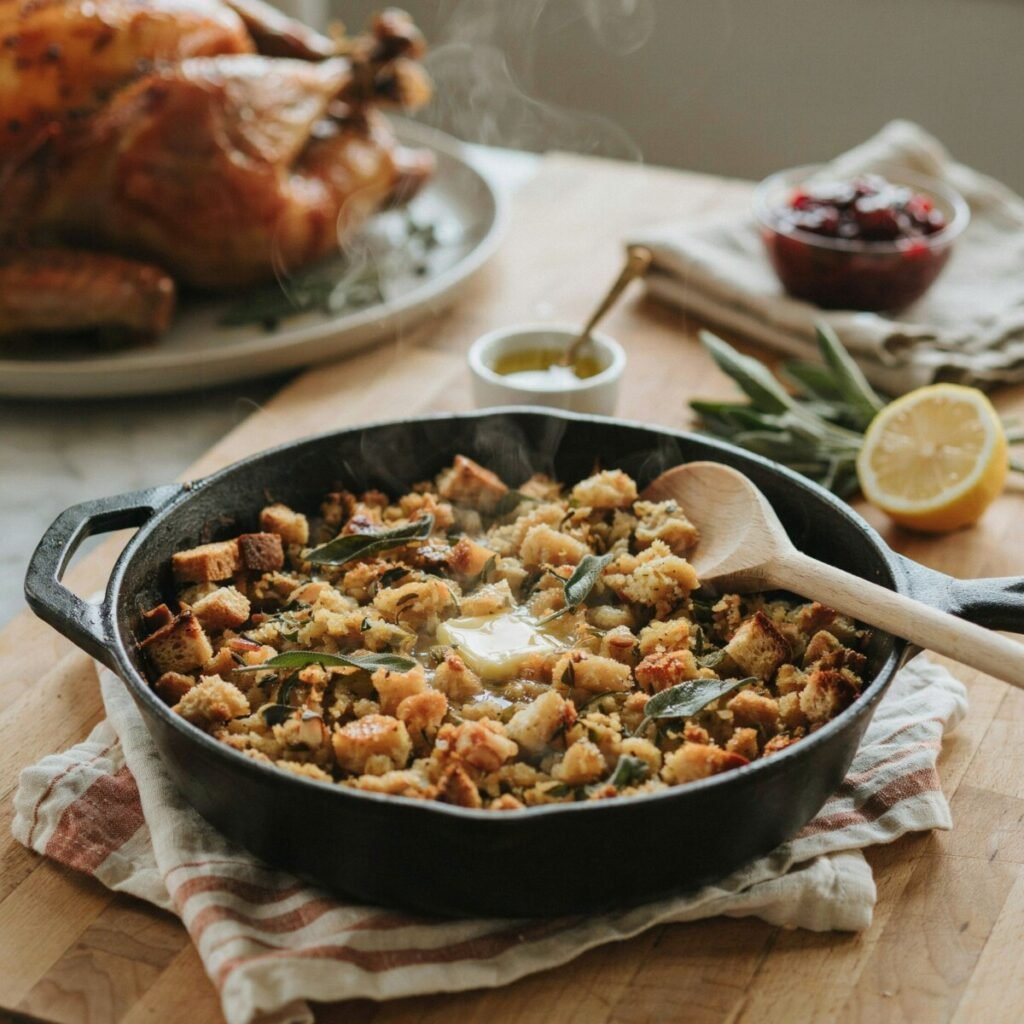
The Roots and Richness of Southern Dressing
To truly appreciate this dish, you have to understand the deep roots of cornbread in Southern cooking. Long before it became a Thanksgiving staple, corn was the lifeblood of the Americas. Indigenous peoples cultivated and ground corn into meal, a tradition that was eventually adopted and adapted by European settlers and enslaved Africans in the South. Because wheat was difficult to grow in the hot, humid Southern climate, cornmeal became the primary grain, giving birth to the beloved, skillet-baked cornbread we know today.
Cornbread stuffing evolved out of sheer frugality and resourcefulness. In the days before refrigeration, leftover stale cornbread was simply too precious to throw away. Clever cooks began crumbling it, mixing it with whatever aromatics and leftover meats they had on hand, and moistening it with rich homemade stock. The result was a hearty, filling side dish that stretched a little bit of food into a feast. Over generations, this practical necessity transformed into a cherished culinary heritage.
The flavor profile of a traditional Southern cornbread dressing recipe is deeply savory, earthy, and robust. Unlike some northern bread stuffings that lean on sweet breads or dried fruits, cornbread stuffing relies on a crumbly cornmeal base, the savory trinity of onions and celery, and a heavy hand with herbs like rubbed sage and fresh thyme. The addition of pork—whether it’s crumbled breakfast sausage, smoked bacon, or even a spoonful of bacon grease—adds a layer of umami richness that is absolutely irresistible. When baked to perfection, the edges get wonderfully crisp while the center remains incredibly moist.
The Pantry: Ingredients and Ratios
The magic of a great cornbread stuffing recipe from scratch lies in the quality and balance of its ingredients. Let’s break down what you’ll need and why each component matters.
The Cornbread: First, the star of the show. You’ll need about 6 to 8 cups of crumbled cornbread for an 8–10 serving dish. Now, here is where a fierce debate often arises: sweet or savory? In the deep South, the best cornbread for stuffing is strictly savory, made with buttermilk and absolutely no sugar. Sugar can make your stuffing overly sweet and cause it to burn more easily in the oven. If you’re baking it yourself, use a savory recipe. If you’re buying it or using a boxed mix, just be mindful of the sugar content and adjust your added seasonings accordingly.
The Aromatics: You can’t build a proper flavor foundation without a generous amount of diced yellow onion and celery. Sautéing these in butter (or bacon fat, if you’re feeling indulgent) mellows their bite and releases a sweet, savory aroma that permeates the entire dish.
The Liquid: You’ll need a high-quality stock—chicken, turkey, or vegetable—to moisten the cornbread crumbs. Understanding the optimal bread-to-moisture ratio is crucial, and utilizing warm broth is one of the best moist stuffing tips you can keep in your back pocket. Start with about 2 to 2.5 cups of stock for every 6 to 8 cups of crumbs. You want the mixture to be thoroughly saturated but not swimming in liquid.
The Binders & Seasonings: Two large, lightly beaten eggs are essential; they act as the glue that holds the crumbly mixture together so it slices beautifully rather than falling apart into a pile of mush. For seasoning, you’ll want kosher salt, freshly cracked black pepper, fresh sage, fresh thyme, and chopped parsley. A teaspoon or two of poultry seasoning is a fantastic shortcut if you’re in a pinch.
How to Make Cornbread Stuffing: Step-by-Step
Ready to learn how to make cornbread stuffing that will have your guests begging for the recipe? Follow these clear, step-by-step instructions.
Step 1: Prep and Dry the Cornbread
The most important secret to avoiding a soggy, mushy texture is using dry cornbread. Bake your cornbread a day in advance, let it cool completely, and then crumble it into a large bowl. Leave the pieces slightly uneven—some fine crumbs, some larger chunks—to create a varied texture. Let the crumbled cornbread sit out uncovered overnight to stale. When it comes to drying cornbread for stuffing in a pinch, the oven method is a lifesaver: simply spread the crumbs on a baking sheet and toast them in a 250°F oven for 20–30 minutes until dried out.
Step 2: Cook the Meat (Optional)
If you are making a cornbread and sausage stuffing, place a large skillet over medium heat. Add 1 lb of breakfast or Italian sausage, crumbling it with a wooden spoon as it cooks. Once it’s fully browned and cooked through, remove the sausage with a slotted spoon and set it aside, leaving the delicious rendered fat in the skillet. (If using bacon, cook it until crispy, crumble it, and reserve the grease).
Step 3: Sauté the Aromatics
In the same skillet with the sausage fat (add a few tablespoons of butter if you skipped the meat), add 2 cups of diced yellow onion and 1.5 cups of diced celery. Sauté over medium heat for about 8–10 minutes until the vegetables are soft and translucent. Stir in 2 tablespoons of minced fresh sage, 1 tablespoon of fresh thyme, and 1 teaspoon of salt and half a teaspoon of black pepper. Cook for one more minute until incredibly fragrant.
Step 4: Combine the Mixture
Transfer the sautéed vegetable mixture (and any cooked meat) into your large bowl of dried cornbread crumbs. Gently toss to combine. In a separate small bowl, whisk together 2.5 cups of warm chicken or turkey stock and 2 large eggs. Pour this liquid mixture evenly over the cornbread and vegetables.
Step 5: Fold and Season
Using a large spatula or your hands, gently fold the mixture together. You want to evenly distribute the moisture without mashing the crumbs. Taste a small spoonful (the eggs are cooked in the next step, but the stock should be flavorful) and adjust the seasoning. Add more salt, pepper, or a dash of poultry seasoning if desired. Let the mixture sit for 10 minutes so the cornbread can fully absorb the liquid.
Step 6: Bake to Perfection
You have two baking options for your turkey day stuffing.
- Option A (The Casserole Method – Recommended): Preheat your oven to 350°F. Transfer the stuffing mixture into a generously buttered 9×13-inch casserole dish. Bake uncovered for 35–45 minutes. The stuffing is done when the top is beautifully golden brown and crisp, and the internal temperature reaches roughly 165°F.
- Option B (Stuffing the Turkey): Loosely spoon the mixture into the turkey cavity just before roasting. Do not pack it tightly, as it needs room to expand and cook evenly. Note: The turkey will take longer to cook, and you must use a meat thermometer to ensure the very center of the stuffing reaches a safe 165°F before serving.
Make-Ahead Stuffing, Storage, and Reheating
Thanksgiving day is a marathon, not a sprint, and this make-ahead stuffing is a lifesaver. You can easily prep this dish in advance to save time and sanity.
- To freeze the cornbread: Bake and crumble your cornbread up to a month in advance. Store the crumbs in a heavy-duty freezer bag, squeezing out as much air as possible. When ready to use, thaw and proceed with the drying step.
- To assemble ahead of time: You can fully assemble the unbaked stuffing (combining the dry crumbs, sautéed veggies, meat, and stock/egg mixture) the night before. Transfer it to your buttered casserole dish, cover tightly with foil, and refrigerate. On Turkey Day, simply pop it in the oven! You may need to add 10–15 minutes to the stuffing baking time since it’s starting cold.
For leftovers, store the baked cornbread stuffing in an airtight container in the refrigerator for up to 4 days. To reheat, avoid the microwave, which will turn it to mush. Instead, place portions in an oven-safe dish, splash a tablespoon of broth over the top to restore moisture, and warm at 350°F until heated through. This reheating method is so effective you won’t even need to go searching for leftover cornbread stuffing recipes to salvage your day-old sides!
Variations and Dietary Swaps
One of the best things about this Southern cornbread stuffing recipe is how adaptable it is. Whether you’re accommodating allergies or simply looking to jazz things up, here are some fantastic variations:
- Vegetarian Cornbread Dressing: To make a stellar vegetarian version, simply omit the sausage or bacon. Sauté your aromatics in a generous amount of unsalted butter or olive oil, and use a rich, high-quality vegetable stock instead of poultry broth. Add a handful of toasted pecans or walnuts for a satisfying, meaty crunch.
- Gluten-Free Cornbread Stuffing: Cornmeal is naturally gluten-free, but cross-contamination can occur. Ensure you are using certified gluten-free cornmeal and check the labels on your stock and poultry seasoning. This makes it incredibly easy to serve gluten-free guests without making a separate dish!
- Dairy-Free Swaps: Substitute the butter used for sautéing with olive oil, dairy-free butter, or (my personal favorite) rendered bacon grease. Use a dairy-free milk alternative if your cornbread recipe calls for buttermilk.
- Flavor Twists: Want a Cajun kick? Swap the standard breakfast sausage for spicy Andouille sausage and add a dash of Creole seasoning. Prefer a sweet-and-savory profile? Fold in 2 cups of diced, tart Granny Smith apples and use a maple-flavored breakfast sausage.
- Coastal Addition: If you live near the coast, consider an oyster dressing. Fold in a pint of shucked oysters (and their liquor) during the final mixing stage. Reduce your added stock slightly to account for the extra moisture from the oysters.
Serving Suggestions and Pairing
When it comes to the Thanksgiving plate, balance is everything. Cornbread dressing boasts a rich, savory profile and a texture that contrasts beautifully with moist, tender turkey. Because the stuffing is so flavorful and hearty, it pairs wonderfully with brighter, acidic sides to cut through the richness. Think tangy cranberry-orange relish, a crisp shaved Brussels sprout salad with a lemon vinaigrette, or simple garlic-sautéed green beans.
Don’t forget the gravy! A rich, peppery turkey giblet gravy is the perfect crowning glory to spoon over a scoop of oven-baked cornbread stuffing.
For beverage pairings, pour a glass of crisp, dry white wine like a Sauvignon Blanc or an unoaked Chardonnay. If you prefer beer, a malty amber ale or a spiced brown ale complements the roasted, earthy notes of the sage and cornmeal perfectly.
Troubleshooting and FAQs
Even the best cooks run into hiccups. Here are quick fixes for common stuffing dilemmas:
- Is your stuffing soggy? You likely used fresh, moist cornbread or added too much stock. Next time, ensure you properly dry your cornbread crumbs for stuffing in the oven, and add your liquid gradually. If it’s already baked and mushy, scoop it back into a skillet and cook it on the stovetop over medium heat to evaporate the excess moisture.
- Is it too dry? Your cornbread might have been too stale, or you didn’t use enough liquid. Simply warm up an extra half-cup of stock, drizzle it over the baked casserole, cover it with foil, and return it to the oven for 10 minutes.
- Is the cornbread overly sweet? If you accidentally used a sweet Northern-style cornbread, balance the dish by adding a splash of apple cider vinegar to your stock mixture, and go heavy on the savory herbs and black pepper.
- Forgot to season it? If the baked stuffing tastes flat, whisk together a little melted butter, extra salt, and a pinch of cayenne or poultry seasoning, and brush it over the top before serving.
Closing Thoughts
Cornbread stuffing is more than just a side dish; it’s a celebration of heritage, hospitality, and the simple joy of gathering around the table with the people you love. Whether you stick to the classic recipe or make it your own with sausage and apples, this Southern staple is sure to become a permanent fixture on your holiday menu.
What’s your family’s secret ingredient for Thanksgiving cornbread stuffing? Do you call it stuffing or dressing? Drop a comment below to share your stories and variations! And don’t forget to check out the printable recipe card below. Happy Turkey Day, y’all!
🖨️ Printable Recipe Card: Southern Cornbread Stuffing
Yield: 8-10 Servings | Prep Time: 30 minutes | Cook Time: 45 minutes
Ingredients
- 6 to 8 cups crumbled savory cornbread (homemade or store-bought, dried out)
- 1 lb breakfast sausage or Italian sausage (optional)
- 4 Tbsp unsalted butter (if omitting sausage)
- 2 cups yellow onion, diced
- 1.5 cups celery, diced
- 2 Tbsp fresh sage, minced
- 1 Tbsp fresh thyme leaves
- 2.5 cups chicken, turkey, or vegetable stock (warmed)
- 2 large eggs, lightly beaten
- 1 tsp kosher salt (plus more to taste)
- 1/2 tsp freshly cracked black pepper
- 1/4 cup fresh parsley, chopped
- Optional: 1 tsp poultry seasoning
Instructions
- Prep the Crumbs: Ensure your cornbread is dried out. If making the same day, crumble it onto a baking sheet and bake at 250°F for 20-30 minutes until dry to the touch.
- Brown the Meat: In a large skillet over medium heat, cook the sausage until browned, crumbling it as it cooks. Remove sausage with a slotted spoon, leaving the fat in the pan.
- Sauté Aromatics: Add the butter (if needed), onion, and celery to the skillet fat. Sauté for 8-10 minutes until soft. Stir in the sage, thyme, salt, pepper, and poultry seasoning. Cook for 1 minute until fragrant.
- Combine: Transfer the skillet mixture to a large bowl with the dried cornbread crumbs and cooked sausage. Toss gently.
- Bind: In a separate bowl, whisk the warm stock and eggs. Pour over the cornbread mixture and fold gently until evenly moistened. Let sit for 10 minutes.
- Bake: Preheat oven to 350°F. Transfer the mixture to a buttered 9×13-inch baking dish. Bake for 35–45 minutes until the top is golden brown and crispy, and the center reaches 165°F.
- Rest & Serve: Let the stuffing rest for 10-15 minutes before scooping. Garnish with extra fresh parsley.
Chef’s Notes
- Make-Ahead: Assemble the entire dish in the casserole pan, cover tightly, and refrigerate up to 24 hours in advance. Add 10-15 minutes to the baking time if going straight from fridge to oven.
- Vegetarian: Omit the meat, use butter or olive oil to sauté the veggies, and swap in rich vegetable stock. Add toasted pecans for crunch!
- Stuffing the Bird: If placing inside the turkey cavity, pack it very loosely and ensure the internal temp of the stuffing hits 165°F before pulling the bird from the oven.
