
There’s something unmistakably summery about the first bite of fresh strawberry shortcake. Warm, buttery biscuits split open to reveal a flood of ruby-red macerated strawberries, all crowned with a pillowy swirl of cold homemade whipped cream. It’s the kind of dessert that tastes like sunshine and lazy afternoons, and it requires nothing fancy—just ripe fruit, a few pantry staples, and about an hour of your time.
Every year, when strawberry season hits its peak across the United States, this classic strawberry shortcake becomes the dessert everyone reaches for. It’s a family-friendly summer dessert that works just as well at a Fourth of July barbecue as it does at a quiet Tuesday dinner. And the best part? This easy strawberry shortcake recipe is genuinely forgiving, even for first-time bakers.
Whether you’ve made strawberry shortcake from scratch a dozen times or you’re wondering how to make strawberry shortcake for the very first time, this guide will walk you through every layer, every shortcut, and every trick for getting it just right.
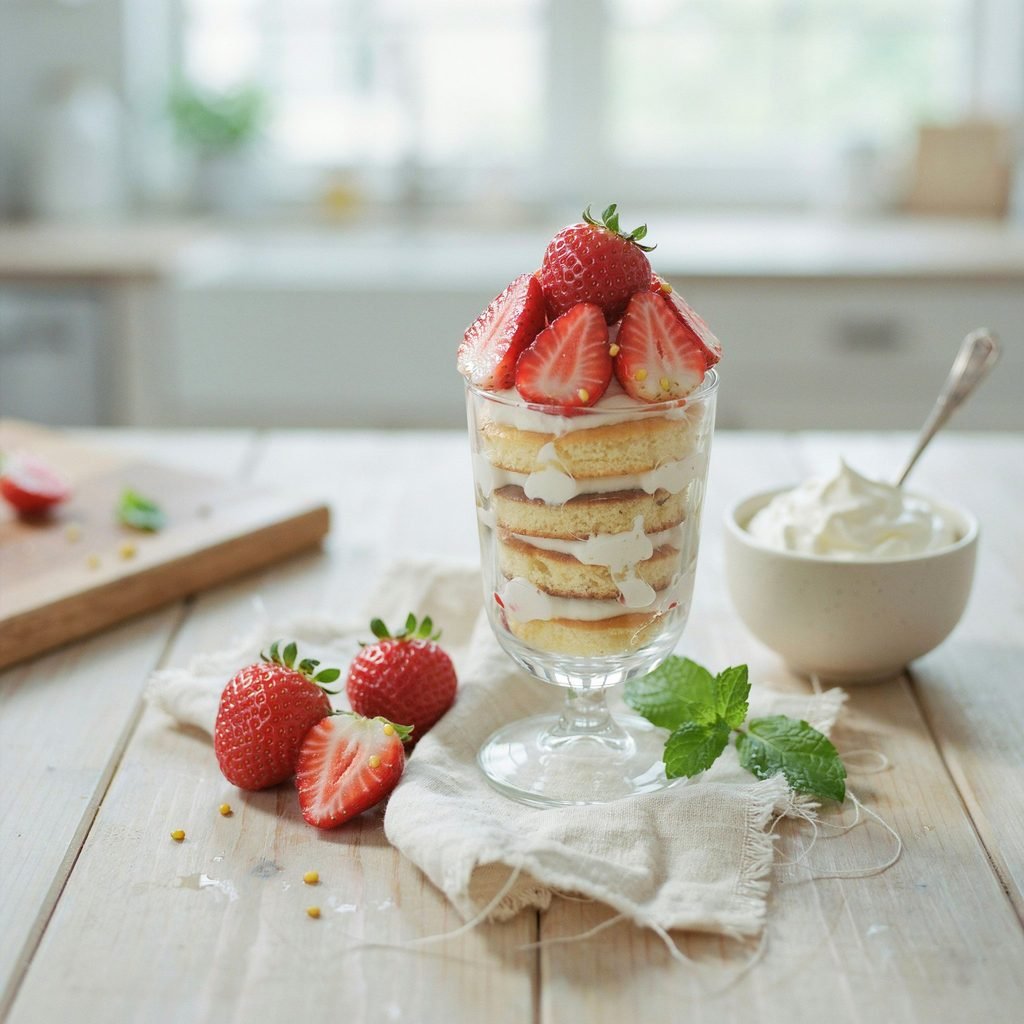
What Is Traditional Strawberry Shortcake?
Traditional strawberry shortcake is built on three simple layers: juicy macerated strawberries, tender biscuit-style shortcakes, and fresh whipped cream. Notice the word biscuit. The original American version relies on a slightly sweetened, flaky shortcake biscuit—closer to a scone than a layer cake.
Over the decades, you’ll also see versions made with sponge cake, angel food cake, or those little store-bought shortcake cups from the bakery aisle. They all work, but the biscuit shortcake recipe is where the magic lives. The contrast between the crisp, buttery exterior of the biscuit and the soft, syrup-soaked interior is what makes homemade strawberry shortcake unforgettable.
Ingredients for Fresh Strawberry Shortcake
Here’s everything you need for this summer strawberry dessert, broken down by component:
For the macerated strawberries:
- 2 pounds fresh strawberries, hulled and sliced
- ¼ cup granulated sugar
- 1 teaspoon lemon juice (optional)
For the shortcake biscuits (makes 8):
- 2 cups all-purpose flour
- ¼ cup granulated sugar
- 1 tablespoon baking powder
- ½ teaspoon salt
- ½ cup (1 stick) cold unsalted butter, cubed
- ¾ cup cold buttermilk (or whole milk)
- 1 teaspoon vanilla extract
- 1 tablespoon coarse sugar, for sprinkling
For the homemade whipped cream:
- 1½ cups cold heavy whipping cream
- 3 tablespoons powdered sugar
- 1 teaspoon vanilla extract
Optional garnishes: fresh mint leaves, lemon zest, extra whole berries, a dusting of powdered sugar.
Recipe at a Glance
| Detail | Info |
|---|---|
| Prep Time | 20 minutes |
| Bake Time | 14–18 minutes at 425 °F |
| Total Time | About 50 minutes (plus 20 min macerating) |
| Servings | 8 |
How to Choose the Best Fresh Strawberries
The best strawberries for shortcake are the ones that smell like strawberries before you even bite into them. Whether you’re shopping at a grocery store or a farmers’ market, look for berries that are:
- Deep red all the way to the stem. Avoid white or green shoulders, which signal under-ripeness.
- Firm but not hard. A gentle squeeze should yield slightly.
- Fragrant. Sweet, floral aroma is the single best indicator of flavor.
- Dry and blemish-free. Skip containers with mold, mushiness, or pooled juice.
- In season. Domestic strawberry season typically runs April through July, depending on your region. Local berries from a farmers’ market or pick-your-own farm tend to be smaller but significantly more flavorful than shipped berries.
If you can, smell the container. If you get nothing, the berries likely won’t taste like much either.
How to Make Strawberry Shortcake From Scratch
This is the heart of the easy strawberry shortcake recipe. Follow these five steps and you’ll have a stunning fresh fruit dessert on the table in under an hour.
Step 1: Macerate the Strawberries
Wash, hull, and slice your fresh strawberries into ¼-inch pieces. Toss them with ¼ cup sugar and the lemon juice in a large bowl. Stir gently, then let the bowl sit at room temperature for at least 20 minutes (or up to 2 hours in the fridge). The sugar draws out the juices, creating that gorgeous syrupy liquid that soaks into the biscuit. These macerated strawberries are the soul of the dessert.
Step 2: Bake the Shortcake Biscuits
Preheat your oven to 425 °F and line a baking sheet with parchment paper. Whisk together the flour, sugar, baking powder, and salt. Cut the cold butter into the dry mixture using a pastry cutter or your fingertips until the pieces are pea-sized. Stir in the cold buttermilk and vanilla just until a shaggy dough forms. Turn it out onto a floured surface, pat it into a ¾-inch-thick round, and cut with a 3-inch biscuit cutter. Place the rounds on the sheet, brush the tops with a little milk, and sprinkle with coarse sugar. Bake for 14 to 18 minutes, until golden. Transfer to a wire rack.
Step 3: Whip the Cream
Pour the cold heavy whipping cream into a chilled bowl. Beat with a hand mixer or stand mixer on medium-high until soft peaks form, about 2 minutes. Add the powdered sugar and vanilla, then beat another 30 seconds until medium-stiff peaks appear. Don’t walk away—over-whipped cream turns grainy fast.
Step 4: Assemble
Split each warm or cooled biscuit in half horizontally. Spoon a generous layer of macerated strawberries and their juices onto the bottom half. Add a tall dollop of whipped cream topping. Cap with the top half of the biscuit.
Step 5: Garnish and Serve
Finish each plate with a few extra berry slices, a mint leaf, a whisper of lemon zest, or a light snowfall of powdered sugar. Serve immediately while the biscuit still has a little warmth and the cream is cold.
Tips for Tender, Flaky Shortcake Biscuits
A great flaky shortcake comes down to a few non-negotiable habits:
- Keep everything cold. Cold butter creates steam pockets in the oven, which is what gives you those tender, flaky layers. If your kitchen is warm, chill the dough for 10 minutes before baking.
- Don’t overmix. Stir the wet into the dry just until combined. Overworking develops gluten and turns buttery biscuits into tough pucks.
- Use fresh baking powder. Baking powder loses potency after about six months. If yours is old, your biscuits won’t rise properly.
- Don’t overbake. Pull them out the moment the tops are golden. A minute too long dries them out.
- Pat, don’t roll. Gently patting the dough preserves the butter layers better than a rolling pin does.
Delicious Strawberry Shortcake Variations
Once you’ve mastered the classic strawberry shortcake, try these strawberry shortcake variations to keep things interesting all summer long:
- Lemon Strawberry Shortcake: Add 1 tablespoon lemon zest to the biscuit dough and a squeeze of lemon to the berries for a bright, citrusy twist.
- Mixed Berry Shortcake: Swap half the strawberries for blueberries, raspberries, or blackberries. This berry dessert recipe variation is gorgeous and adds a tart counterpoint.
- Grilled Strawberry Shortcake: Halve the biscuits, brush with melted butter, and grill for 1–2 minutes per side before assembling. The char adds a smoky depth that’s incredible at a summer barbecue.
- Gluten-Free Strawberry Shortcake: Replace the all-purpose flour with a 1-to-1 gluten-free baking blend. The texture will be slightly more tender, but the flavor holds up beautifully.
- Vegan Strawberry Shortcake: Use cold coconut oil or vegan butter in place of dairy butter, swap buttermilk for cold oat milk mixed with 1 teaspoon apple cider vinegar, and top with coconut whipped cream.
- Shortcut Versions: No time to bake? Layer macerated berries and whipped cream over slices of store-bought pound cake, angel food cake, or pre-made shortcake cups. Still delicious, and ready in ten minutes.
Make-Ahead and Storage Tips
Strawberry shortcake is best assembled just before serving, but you can absolutely prep the components ahead of time. Here’s how to handle a make-ahead strawberry shortcake:
- Strawberries: Macerate up to 4 hours ahead. Keep refrigerated.
- Biscuits: Bake up to 1 day ahead. Store in an airtight container at room temperature. Reheat at 350 °F for 5 minutes before serving. You can also freeze baked biscuits for up to 2 months; thaw and warm before assembling.
- Whipped cream: Whip up to 2 hours ahead and refrigerate. Give it a quick re-whip before serving.
- Assembled shortcakes: Serve within 30 minutes. Beyond that, the biscuit absorbs too much juice and turns soggy.
Wondering how to store strawberry shortcake leftovers? Keep components separate in the refrigerator for up to 2 days. If the shortcakes are already assembled, refrigerate them loosely covered and eat within a few hours. The texture won’t be perfect, but the flavor will still be wonderful.
When to Serve Strawberry Shortcake
This is one of the most versatile simple summer desserts you can make. A few favorite occasions:
- Memorial Day and Fourth of July: The red berries and white cream practically beg to be part of a patriotic spread. Pair with lemonade for the ultimate Memorial Day dessert or Fourth of July dessert.
- Summer barbecues and cookouts: Set out the biscuits, berries, and cream in separate bowls and let guests build their own. It’s an easy, interactive summer barbecue dessert.
- Picnics: Pack the components separately in a cooler and assemble on a blanket.
- Baby showers and brunches: The light, fresh flavor and pretty presentation make it a natural for daytime celebrations.
- Casual weeknight dinners: Sometimes the best dessert is the one that takes less than an hour and makes everyone at the table smile.
For summer entertaining, arrange assembled shortcakes on a white platter, tuck a few mint sprigs between them, and dust the whole thing with powdered sugar right before guests sit down. The visual is effortless, and it photographs beautifully.
Frequently Asked Questions
Can I use frozen strawberries for strawberry shortcake?
You can in a pinch, but thawed frozen berries release a lot of water and tend to be softer and less sweet than fresh strawberries. If you go this route, thaw them, drain the excess liquid, and add a little extra sugar. Fresh is always better for this recipe.
Should shortcake be served warm or cold?
Slightly warm biscuits with cold cream and room-temperature berries create the best contrast. If you baked the biscuits ahead, a quick 5-minute warm-up in a 350 °F oven brings back that fresh-from-the-oven texture.
Can I make the biscuits ahead of time?
Yes. Bake them up to a day in advance and store them airtight at room temperature, or freeze them for up to two months. Reheat briefly before assembling.
What can I use instead of heavy whipping cream?
For a lighter option, try whipped coconut cream (chill a can of full-fat coconut milk overnight and whip the solid cream). You can also use a stabilized whipped topping, though the flavor won’t be quite as rich as homemade whipped cream.
How do I stop strawberry shortcake from becoming soggy?
Assemble right before serving, and don’t drown the biscuit in juice. A spoonful of berries and a drizzle of syrup is plenty. Serving within 20–30 minutes of assembly is the single best defense.
Can I use cake instead of biscuits?
Absolutely. Sliced pound cake, angel food cake, or sponge cake all work as a base. The texture will be softer and sweeter, but the combination with fresh berries and cream is still fantastic.
Conclusion
There’s a reason fresh strawberry shortcake has been a staple of American summers for well over a century. It asks almost nothing of you—a handful of ripe berries, a simple biscuit dough, a few minutes of whipping cream—and gives back a dessert that feels generous, celebratory, and deeply satisfying.
Strawberry season doesn’t last forever. The window for those intensely sweet, sun-warmed local berries is just a few short months. So grab a flat from the farmers’ market, preheat the oven to 425 °F, and make this fresh strawberry shortcake while the berries are at their absolute best. Whether you’re feeding a crowd at a summer barbecue or treating yourself on a quiet evening, this timeless summer strawberry dessert never disappoints.
Slice the berries. Whip the cream. Split that warm, flaky biscuit. Summer is waiting on the plate.
