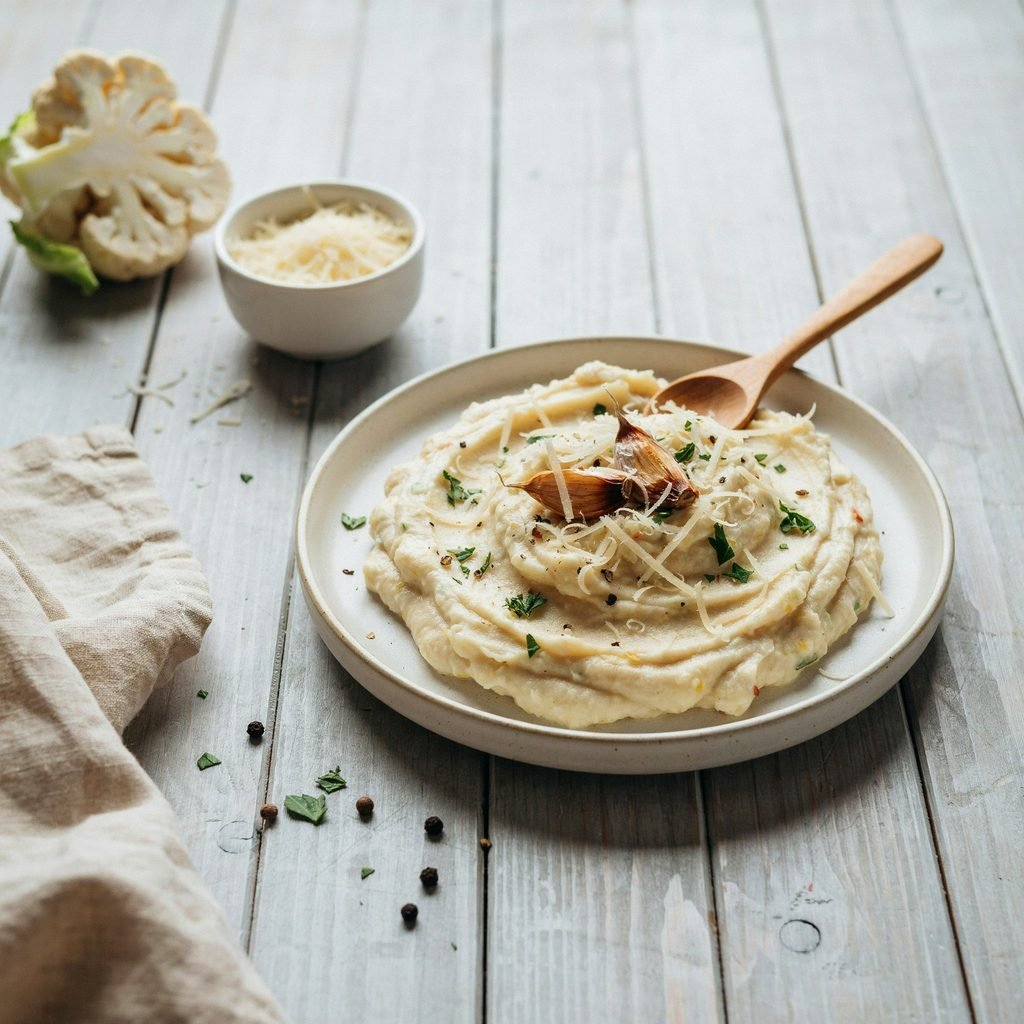
There’s something deeply satisfying about a big spoonful of creamy, buttery mash piled next to a golden roast chicken or a sizzling steak. This Cauliflower Mash Garlic Parmesan delivers every bit of that comfort without the heft of traditional mashed potatoes. Soft cauliflower florets get blended with savory garlic, salty freshly grated Parmesan, a pat of butter, and a swirl of cream cheese until the texture is silky, smooth, and utterly spoonable.
Whether you’re following a low-carb eating plan, planning a keto-friendly holiday spread, looking for a gluten-free side dish, or simply want an easy vegetable side for Tuesday-night pork chops, this garlic Parmesan cauliflower mash fits right in. It pairs beautifully with turkey, meatloaf, salmon, steak, or roasted chicken, and it comes together in about thirty minutes with ingredients you can grab at any grocery store.
Why You’ll Love This Cauliflower Mash Garlic Parmesan
- Creamy, buttery, and deeply savory. The combination of Parmesan, butter, and cream cheese gives this mash a richness that rivals any potato-based side dish.
- Simple, accessible ingredients. No specialty shopping trips required—just cauliflower, garlic, cheese, and a few pantry staples.
- Easy to customize. Swap herbs, change the cheese, add bacon, or roast the garlic for a holiday-worthy upgrade.
- A lighter alternative to classic mashed potatoes that still feels like comfort food on the plate.
- Naturally gluten-free when prepared with gluten-free ingredients.
- Fits many meal plans, including low-carb, keto, and gluten-free menus.
- Works for any occasion—a quick weeknight side dish, a Thanksgiving side dish, a Christmas dinner side dish, an Easter dinner side dish, or a simple Sunday supper.
No promises about transforming your health here—just a genuinely delicious cauliflower side dish that happens to be lighter than a mountain of buttery potatoes.
Ingredients You’ll Need
- 1 large head of cauliflower (about 2 to 2½ pounds), cut into florets – The base of the mash. Even-sized florets cook uniformly.
- 4 to 6 garlic cloves – Fresh garlic brings sharp, aromatic flavor. Use more if you love it.
- ½ cup freshly grated Parmesan cheese – Freshly grated Parmesan melts smoothly and tastes noticeably better than shelf-stable pre-grated cheese, which often contains anti-caking agents that can make the texture grainy.
- 3 tablespoons butter – Adds richness and a velvety mouthfeel.
- 2 tablespoons cream cheese (or sour cream, heavy cream, half-and-half, whole milk, or unsweetened almond milk) – Cream cheese gives body and tang. Swap in any of the other options depending on your preference or dietary needs.
- ½ teaspoon kosher salt (plus more to taste)
- ¼ teaspoon black pepper (plus more to taste)
- Optional: ¼ teaspoon garlic powder for extra depth
- Optional: Fresh parsley, chives, thyme, or rosemary for garnish
- Optional: A drizzle of olive oil
- Optional: A pinch of red pepper flakes for mild heat
Important tip: After cooking, drain your cauliflower extremely well. Excess water is the number one reason mashed cauliflower turns out soupy instead of smooth and creamy.
How to Make Cauliflower Mash Garlic Parmesan
Prep time: 10 minutes | Cook time: 15–20 minutes | Total time: 25–30 minutes | Servings: 4–6
- Prep the cauliflower. Wash the head of cauliflower and cut it into evenly sized florets, roughly 1½ inches each. Uniform pieces ensure even cooking.
- Cook the cauliflower. You can steam, boil, microwave, roast, or use an Instant Pot. Steaming is my top recommendation because it minimizes water absorption. Place the florets in a steamer basket over boiling water, cover, and steam for 10–12 minutes until very tender when pierced with a fork. (For boiling, cook in salted water 8–10 minutes. For the microwave, place florets in a covered microwave-safe dish with 2 tablespoons water and cook on high 6–8 minutes. For roasting, toss with olive oil and roast at 425°F for 20–25 minutes.)
- Soften the garlic. While the cauliflower cooks, sauté the garlic cloves in a small skillet with a teaspoon of butter over medium-low heat for 2–3 minutes until fragrant and just golden. Alternatively, use roasted garlic for a sweeter, mellower flavor (see section below).
- Drain thoroughly. Transfer the cooked cauliflower to a colander and let it sit for 3–5 minutes, allowing steam and excess moisture to escape. Pat gently with a clean kitchen towel if needed.
- Blend. Add the drained cauliflower, softened garlic, butter, Parmesan, cream cheese, salt, and pepper to a food processor. Pulse, then blend until smooth and creamy, stopping to scrape down the sides once or twice.
- Adjust consistency. If the mash seems too thick, add a splash of heavy cream, whole milk, or unsweetened almond milk—one tablespoon at a time—until you reach your desired texture.
- Taste and season. Add more salt, pepper, or a pinch of garlic powder if desired.
- Garnish and serve. Spoon into a serving bowl and top with extra grated Parmesan, a pat of melted butter, chopped parsley or chives, and cracked black pepper.
A note on equipment: An immersion blender works in a pinch, but a food processor typically produces the smoothest, most uniform cauliflower puree. A high-speed blender also works well if you blend in smaller batches.
The Secret to Creamy, Not Watery, Mashed Cauliflower
Cauliflower is roughly 92 percent water, so managing moisture is the single most important step in achieving a fluffy cauliflower mash rather than a watery puree.
- Steam instead of boiling whenever possible. Steamed cauliflower absorbs far less water than boiled cauliflower.
- If you do boil, drain aggressively. Let the florets sit in a colander for several minutes after draining.
- Let steam escape. Spread the cooked cauliflower on a baking sheet for a minute or two before blending.
- Pat dry with a clean towel if the florets still look wet.
- Add liquid gradually. Blend in cream, milk, or cream cheese a little at a time rather than dumping it all in at once.
- Use cream cheese and Parmesan to build body and richness without adding extra water.
- Don’t overfill the food processor. Work in batches if necessary.
- Fix a loose mash by reheating it gently in a wide skillet over medium-low heat, stirring often, to let excess moisture evaporate. You can also stir in a little extra Parmesan or cream cheese to thicken.
Roasted Garlic vs. Fresh Garlic
Both work beautifully in this mashed cauliflower recipe, but they bring different personalities to the dish.
Sautéed (fresh) garlic delivers a bright, savory, slightly pungent flavor. It’s quick—just a few minutes in butter—and ideal for weeknight cooking when you want garlic mashed cauliflower on the table fast.
Roasted garlic is sweeter, softer, and deeply mellow, with almost caramelized undertones. It makes the mash taste luxurious and is a wonderful choice for holiday meals or dinner parties.
To roast garlic: Slice the top quarter off a whole garlic bulb to expose the cloves. Drizzle with olive oil, wrap tightly in foil, and roast at 400°F for 35–40 minutes until the cloves are soft and golden. Squeeze the roasted cloves straight into the food processor with the cauliflower.
Recipe Variations
- Loaded cauliflower mash: Stir in shredded cheddar, crumbled cooked bacon, sliced green onions, and a dollop of sour cream—think loaded baked potato energy.
- Herb cauliflower mash: Fold in fresh thyme, rosemary, parsley, or chives for a fragrant, garden-fresh finish.
- Cheesy cauliflower mash: Mix in mozzarella, sharp cheddar, Gruyère, or an extra handful of Parmesan for an ultra-cheesy cauliflower mash.
- Vegan cauliflower mash: Use olive oil or vegan butter, unsweetened almond milk, nutritional yeast, and a vegan Parmesan alternative.
- Spicy cauliflower mash: Add red pepper flakes, a pinch of cayenne, or a dash of hot sauce.
- Roasted cauliflower mash: Roast the florets instead of steaming for a deeper, nuttier, slightly caramelized flavor.
- Cauliflower potato mash: Blend half cauliflower with half Yukon Gold potatoes for a more traditional mashed-potato texture while still adding extra vegetables.
What to Serve With Garlic Parmesan Cauliflower Mash
This cauliflower side dish is remarkably versatile. Try it alongside:
- Roast chicken or lemon herb chicken
- Garlic butter steak or grilled steak
- Grilled salmon or baked salmon
- Pan-seared pork chops
- Classic meatloaf with mushroom gravy
- Thanksgiving turkey or roasted turkey breast
- Slow-cooker pot roast
- Sausage and roasted vegetables
- Air fryer chicken thighs
- A spoonful of rich mushroom gravy or pan drippings
For the vegetable course, pair it with green beans, roasted Brussels sprouts, asparagus, or glazed carrots. Serve it under gravy, next to a sliced roast, or as part of a full holiday dinner spread—it stands in beautifully wherever mashed potatoes would normally go.
Make-Ahead, Storage, and Reheating Tips
- Make ahead: Prepare the mash up to two days in advance. Store in an airtight container in the refrigerator.
- Stovetop reheating: Warm over low heat, stirring frequently. Add a small splash of milk, cream, or melted butter if it has thickened.
- Microwave reheating: Heat in 30-second intervals, stirring between each, until warmed through.
- Fixing watery leftovers: Spread the mash in a skillet over medium-low heat and cook, stirring, until excess moisture evaporates.
- Freezing: You can freeze the mash in a freezer-safe container, though the texture may soften and release a little water upon thawing. Cool completely before freezing. Reheat gently and stir in a bit of cream cheese or Parmesan to restore richness.
Frequently Asked Questions
Does cauliflower mash taste like mashed potatoes?
It’s not an exact replica, but when blended with butter, cream cheese, and Parmesan, the texture is surprisingly similar—creamy, smooth, and comforting. The flavor is milder and slightly nuttier than potato.
How do you make cauliflower mash thicker?
Drain the cauliflower very well, use cream cheese or extra Parmesan for body, add liquid slowly, and if needed, cook the mash in a skillet to evaporate excess moisture.
Can I use frozen cauliflower?
Yes. Steam or microwave frozen cauliflower florets directly, then drain and pat them thoroughly. The texture may be slightly softer than fresh, but the flavor works well.
Can I make cauliflower mash without cream cheese?
Absolutely. Substitute sour cream, heavy cream, a splash of whole milk, or even a tablespoon of mayonnaise for tang and creaminess.
Can I use a blender instead of a food processor?
Yes, a high-speed blender works. Add a small splash of liquid to help it blend, and work in batches to avoid overfilling.
Is cauliflower mash keto-friendly?
Cauliflower is naturally low in carbohydrates, and this recipe uses keto-friendly ingredients like butter, cream cheese, and Parmesan, making it a popular keto side dish.
Can I make this recipe dairy-free or vegan?
Yes. Use olive oil or vegan butter, unsweetened dairy-free milk, nutritional yeast, and a plant-based Parmesan alternative.
Why is my mashed cauliflower watery?
The cauliflower likely retained too much cooking water. Steam rather than boil, drain well, let it sit to release moisture, and add dairy gradually.
Can I make garlic Parmesan cauliflower mash ahead of time?
Yes—make it one to two days ahead, refrigerate in an airtight container, and reheat gently with a splash of cream or butter.
What cheese can I use instead of Parmesan?
Pecorino Romano, aged Asiago, Gruyère, sharp white cheddar, or nutritional yeast (for a dairy-free option) all work nicely.
Final Thoughts
If you’ve been searching for a mashed potato substitute that actually satisfies, this Cauliflower Mash Garlic Parmesan is the recipe to keep in your rotation. The magic comes down to two simple steps: drain the cauliflower well and blend it with plenty of garlic, butter, and freshly grated Parmesan. Do that, and you’ll have a rich, smooth, comforting side dish worthy of a holiday table or a quiet Wednesday dinner.
I’d love to hear how it turns out for you. Did you go the roasted garlic route? Add crispy bacon? Serve it next to a juicy steak or a Thanksgiving turkey? Drop a comment and let me know your favorite variation or what main dish you paired it with. Happy cooking!
Cauliflower Mash Garlic Parmesan – Recipe Card
Cauliflower Mash Garlic Parmesan
A creamy, garlicky, Parmesan-rich mashed cauliflower that’s a delicious low-carb alternative to mashed potatoes. Perfect for weeknight dinners, holiday meals, and keto-friendly menus.
Prep Time: 10 minutes
Cook Time: 15 minutes
Total Time: 25 minutes
Servings: 4–6
Ingredients
- 1 large head cauliflower (about 2–2½ lbs), cut into florets
- 4–6 garlic cloves
- ½ cup freshly grated Parmesan cheese
- 3 tablespoons butter
- 2 tablespoons cream cheese (or sour cream / heavy cream)
- ½ teaspoon kosher salt, plus more to taste
- ¼ teaspoon black pepper, plus more to taste
- ¼ teaspoon garlic powder (optional)
- 1–2 tablespoons heavy cream or whole milk (as needed for consistency)
Instructions
- Cut cauliflower into even 1½-inch florets. Steam in a steamer basket over boiling water for 10–12 minutes, until very tender.
- While cauliflower steams, sauté garlic cloves in 1 teaspoon butter over medium-low heat for 2–3 minutes until fragrant and lightly golden.
- Transfer cooked cauliflower to a colander. Let drain 3–5 minutes; pat dry if needed.
- Add cauliflower, garlic, remaining butter, Parmesan, cream cheese, salt, and pepper to a food processor.
- Blend until smooth and creamy, scraping down the sides once or twice. Add cream or milk one tablespoon at a time if a looser texture is desired.
- Taste and adjust seasoning.
- Transfer to a serving bowl. Top with extra Parmesan, melted butter, chopped parsley or chives, and cracked black pepper.
Optional Garnish
Extra grated Parmesan, melted butter, fresh chives, chopped parsley, a crack of black pepper, or a pinch of red pepper flakes.
Storage
Refrigerate in an airtight container for up to 3 days. Reheat gently on the stovetop or in the microwave, adding a splash of cream or butter if needed. Freeze in a freezer-safe container for up to 1 month; thaw overnight in the refrigerator and reheat gently.
Nutrition Disclaimer
Nutrition information for this recipe is an estimate and may vary based on specific brands, ingredient quantities, and serving sizes used. For precise nutritional data, please calculate using your preferred nutrition tool and the exact products you use.
